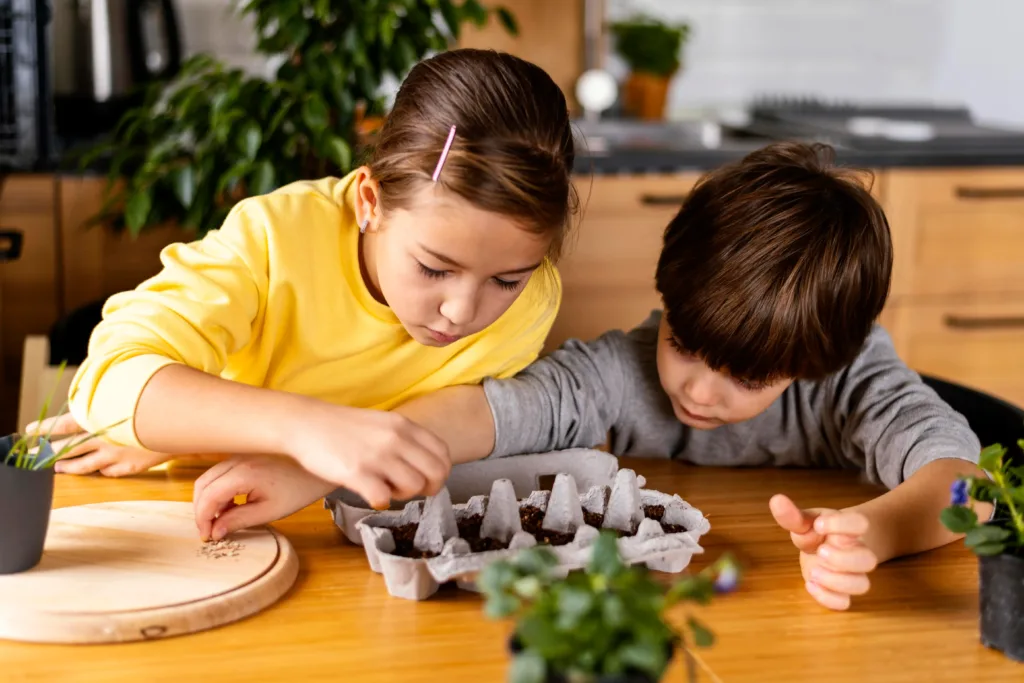
When a preschooler stacks blocks until they topple, or asks “why” for the tenth time today, they’re already doing science.
The best STEM activities for preschoolers are simple, screen-free, and hands-on. Think floating and sinking tests, spaghetti-and-marshmallow towers, or sorting leaves on a nature walk. No formulas, no screens, no expensive kits, just curiosity turned into learning.
Here are 15 easy, tested ideas you can try at home or in the classroom today.
Science Activities for Preschoolers: Exploring the Natural World
Science for young learners is all about observation, prediction, and sensory exploration. These science activities for preschoolers encourage children to ask “why” and “what if.”
1. The Magic Floating & Sinking Test
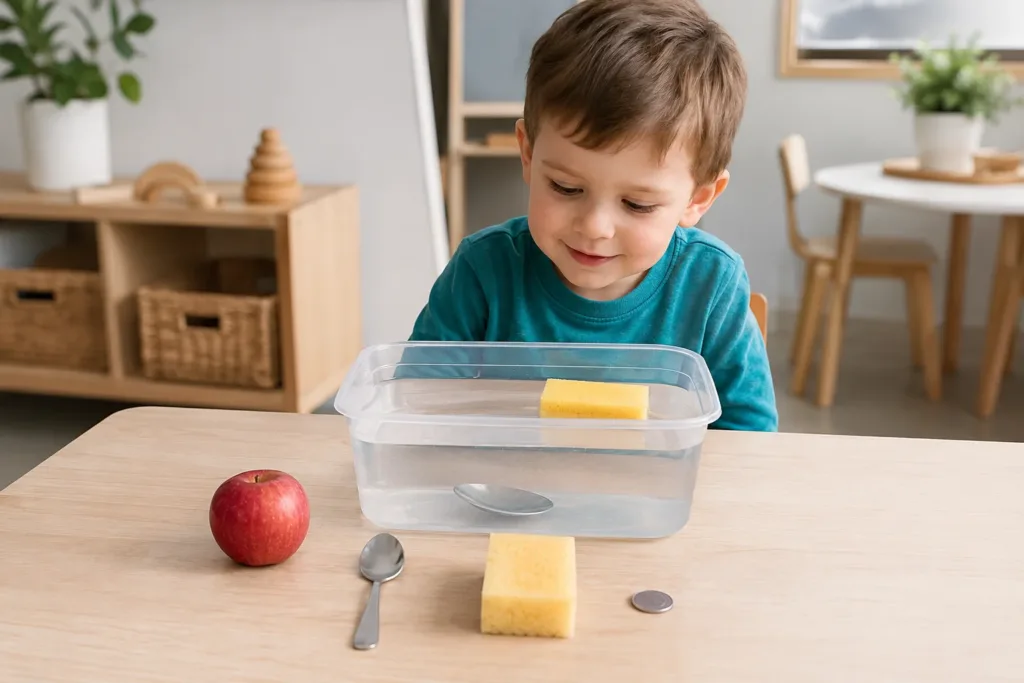
What it teaches: Density, buoyancy, and hypothesis testing.
How to do it: Fill a tub with warm water and gather household items such as an apple, a spoon, a coin, and a sponge. Before dropping each in, ask: “Will this float or sink?”
The learning connection: Sorting predictions from results teaches the core of the scientific method: testing an idea to see what actually happens.
2. Walking Water Experiment
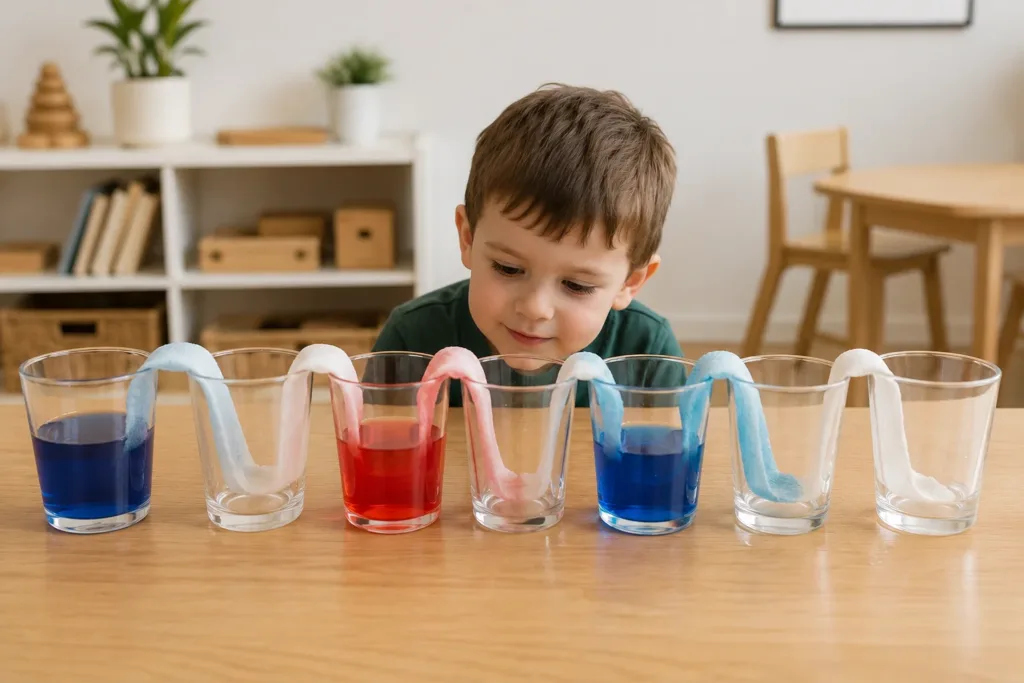
What it teaches: Capillary action, colour mixing, and absorption.
How to do it: Fill alternating cups in a row with coloured water, leaving empty cups between them. Fold paper towel strips between each pair so one end sits in water and the other in an empty cup.
The learning connection: Over a few hours, water “walks” up the towels and drips into the empty cups, creating new colours, making an invisible natural force visible.
3. Ice Egg Excavation
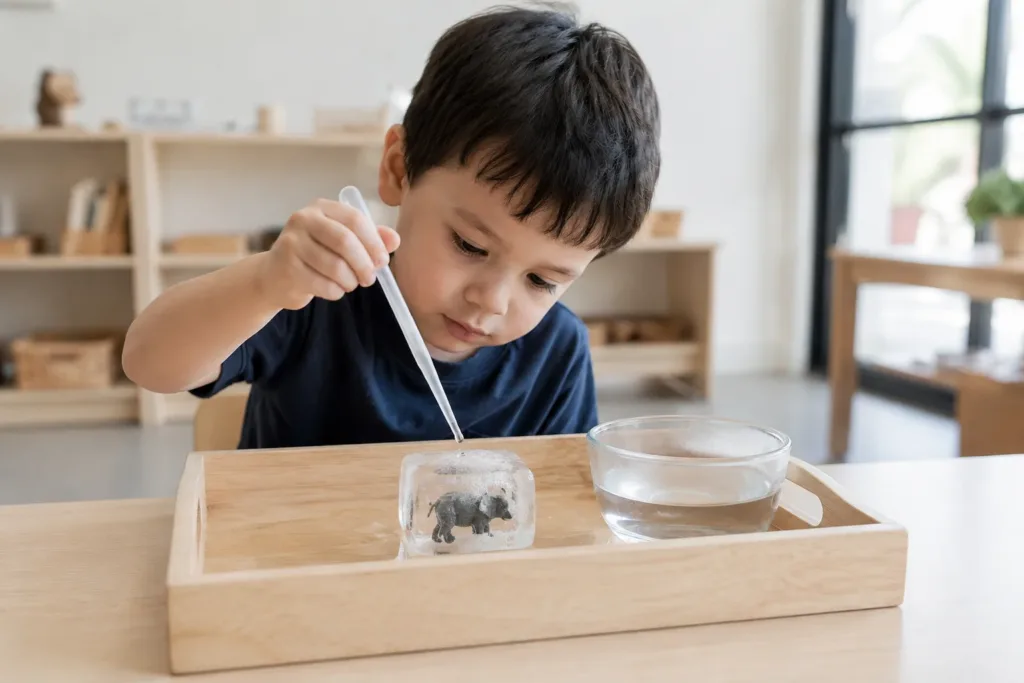
What it teaches: States of matter (solid to liquid), thermal reaction, and fine motor skills.
How to do it: Freeze small toys inside water balloons overnight, then peel away the balloon. Give your child warm salt water and a pipette to melt the ice and “rescue” the toy.
The learning connection: Children see how temperature and salt speed up melting while building hand strength.
Technology Activities for Preschoolers: Understanding Tools & Patterns
For preschoolers, technology doesn’t mean tablets or smartphones. It means understanding tools, simple machines, and sequencing, the foundation of pre-coding.
4. Unplugged “Robot” Obstacle Course
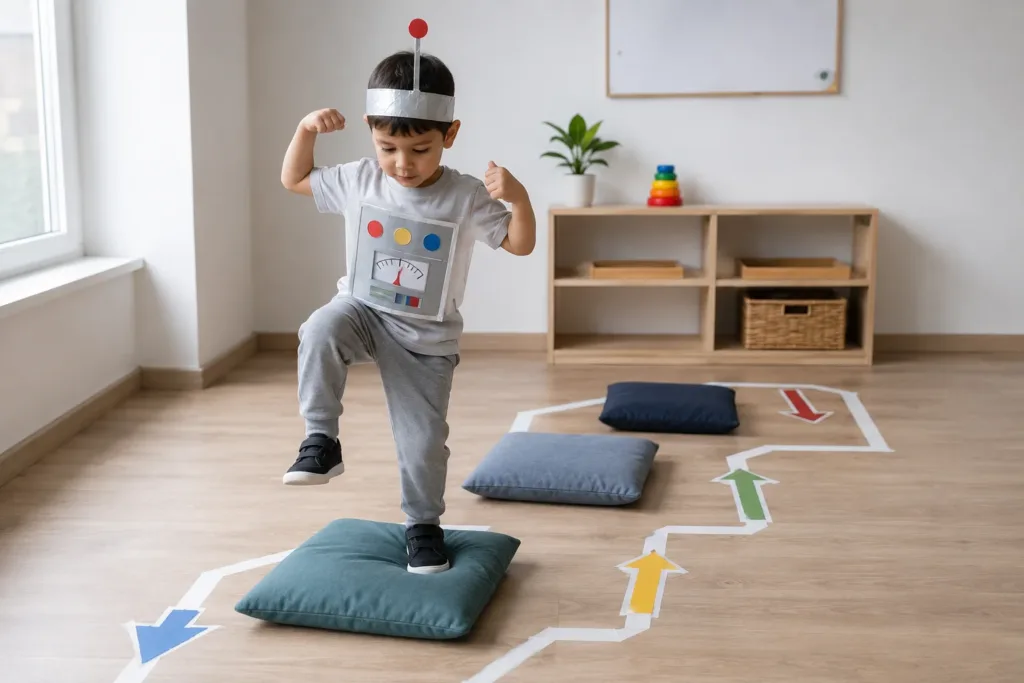
What it teaches: Basic algorithms, spatial awareness, and directional language.
How to do it: Set up cushions and tape lines on the floor. Give simple step-by-step commands (“two steps forward, turn left”) for your child to follow like a robot.
The learning connection: This turns coding logic into physical play, showing that instructions must follow a clear order to work.
5. Light & Shadow Lab
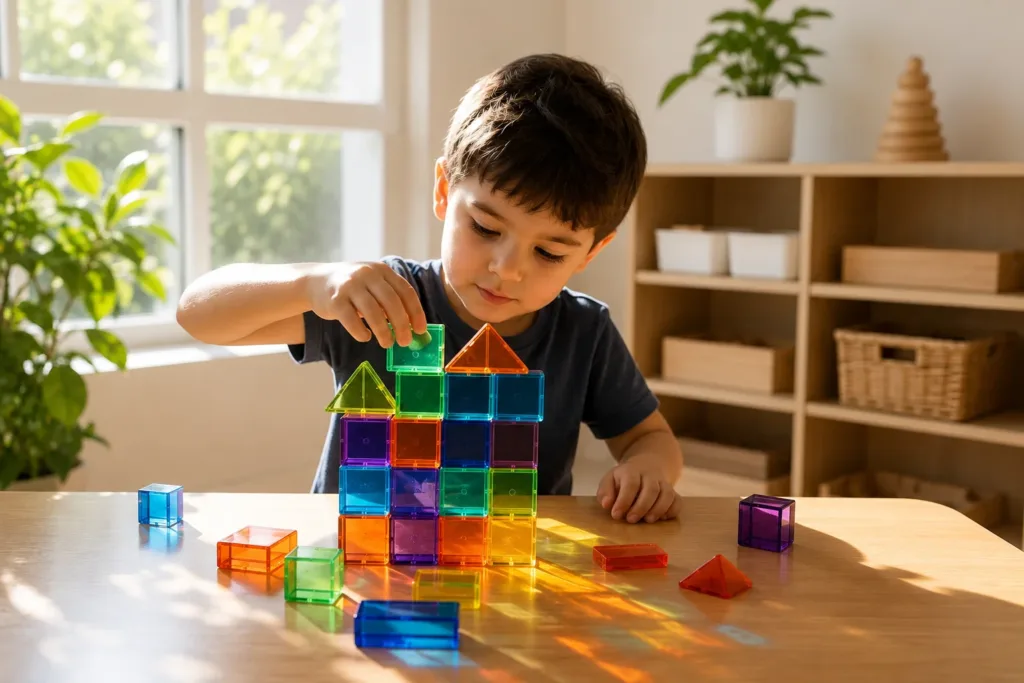
What it teaches: Properties of light, transparency, and reflection.
How to do it: Using translucent building blocks near a sunny window or with a torch in a dim room, build structures and watch coloured light spread across the walls.
The learning connection: Kids learn how light passes through transparent materials and how moving the light source changes the size and angle of shadows.
6. Kitchen Machine Investigation
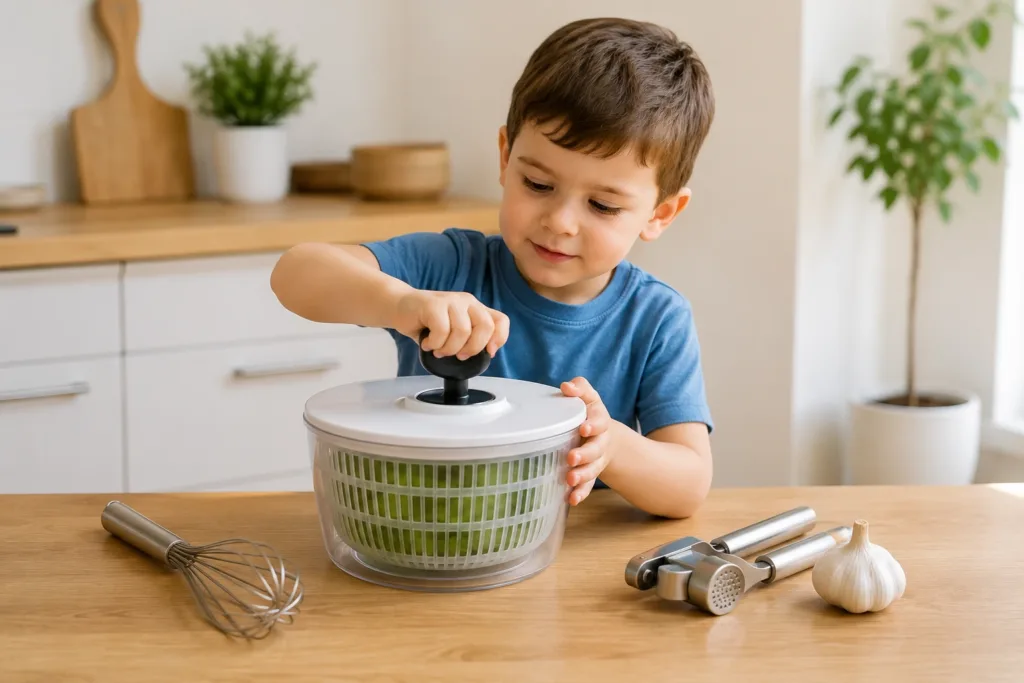
What it teaches: Simple machinery, gears, and mechanical advantage.
How to do it: Let your child explore safe, non-electric tools like a salad spinner, manual egg whisk, or garlic press, noticing how turning a small handle creates a much bigger movement.
The learning connection: Everyday gadgets become an early lesson in how design solves problems.
Engineering Activities for Preschoolers: Building & Design
Engineering activities for preschoolers spark creativity and resilience. When a structure wobbles or falls, children practise trial-and-error problem-solving.
7. Spaghetti and Marshmallow Towers
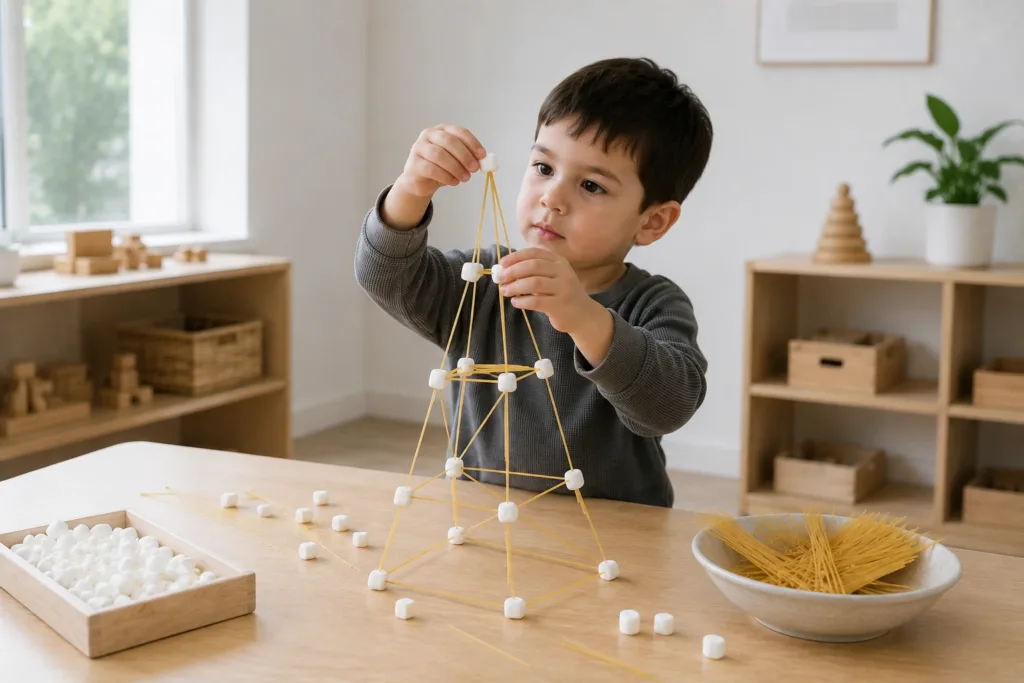
What it teaches: Structural engineering, load distribution, and tension.
How to do it: Give your child dry spaghetti and mini marshmallows and challenge them to build the tallest structure or a bridge that can support a tiny toy car.
The learning connection: Children discover that triangles offer stronger structural support than squares, introducing a real engineering principle.
8. Aluminium Foil Boat Challenge
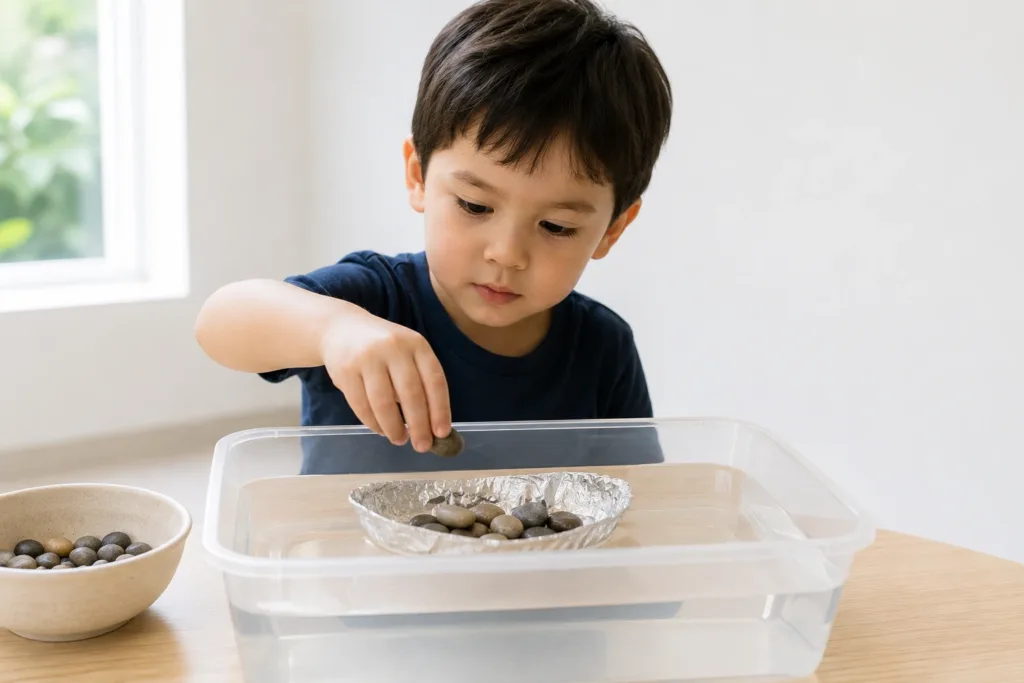
What it teaches: Structural design, surface area, and weight balance.
How to do it: Cut small sheets of aluminium foil and task your child with shaping them into boats. Place the boats in a tub of water and slowly add weight (penny coins or small pebbles) one by one until the boat sinks.
The learning connection: If a boat sinks quickly, encourage them to reshape the foil, making it wider or adding higher sides, to see how changing the shape alters how much weight it can carry.
9. Cardboard Ramp Engineering
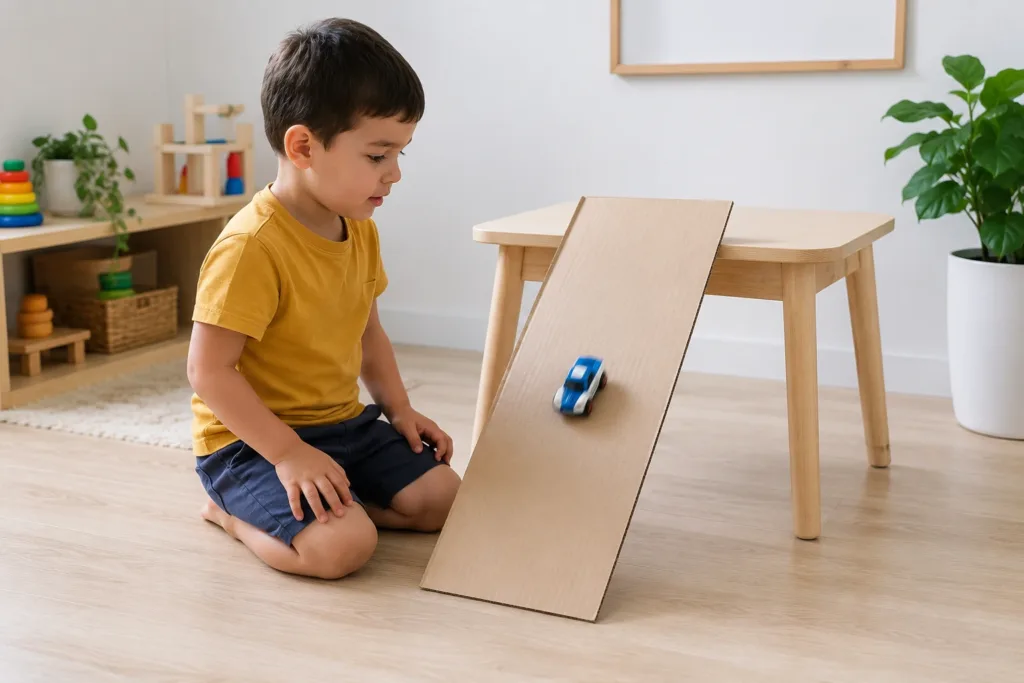
What it teaches: Inclined planes, velocity, gravity, and momentum.
How to do it: Tape cardboard tubes together into a ramp along a wall or couch and race marbles or toy cars down it.
The learning connection: By adjusting the steepness of the ramps, children observe firsthand how gravity affects speed, momentum, and distance.
Maths Activities for Preschoolers: Counting, Sorting, and Patterns
Preschool mathematics is about far more than counting to ten. It includes geometry, spatial awareness, and pattern recognition.
10. Nature Sorting and Patterning Walk
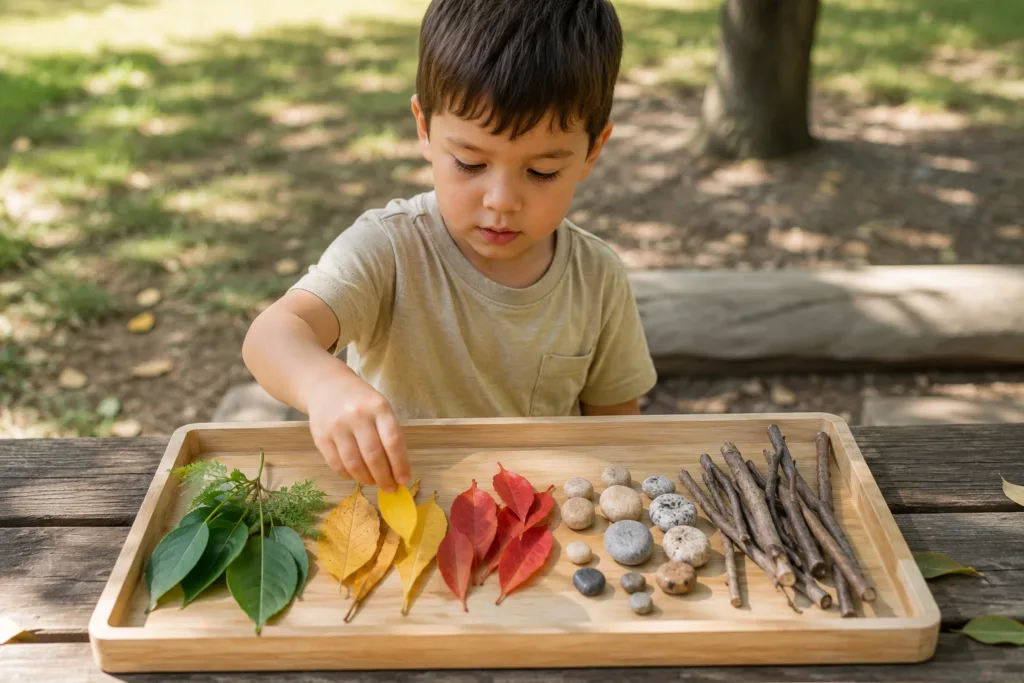
What it teaches: Classification, set creation, attributes, and mathematical patterns.
How to do it: Collect leaves, stones, and twigs on a walk, then sort them by size, colour, or texture and arrange them into repeating patterns (e.g., leaf, stone, leaf, stone).
The learning connection: Categorising real objects lays the groundwork for mathematical and algebraic thinking later in life.
11. Play Dough Shape Sculpting
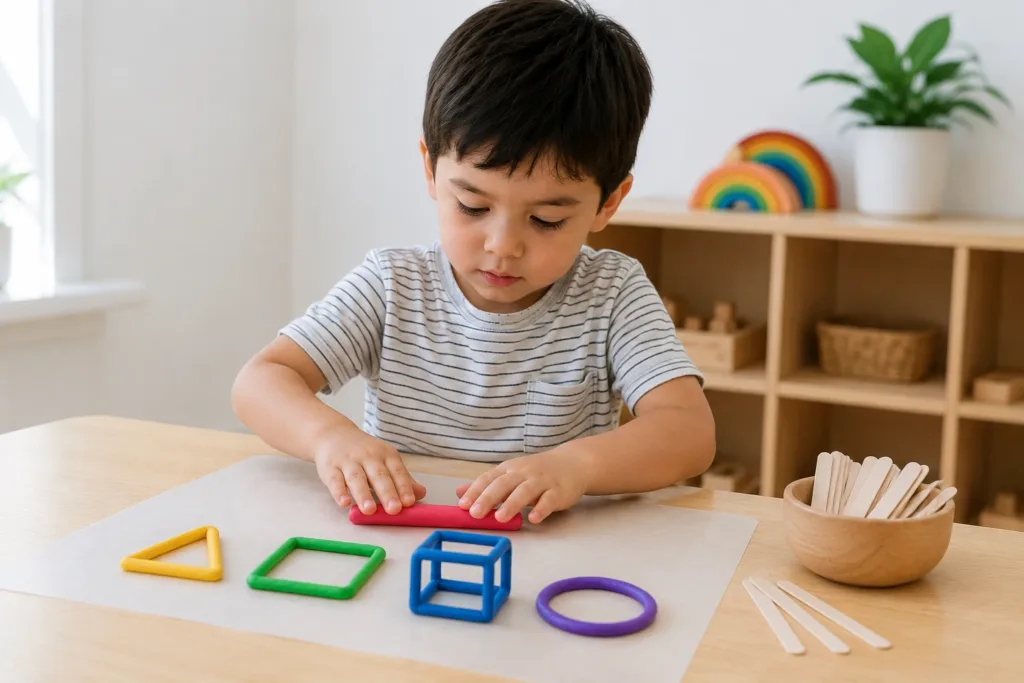
What it teaches: Geometry and spatial transformation.
How to do it: Roll play dough into “snakes” and use craft sticks to build flat shapes, then progress to 3D shapes like cubes and pyramids.
The learning connection: Children learn that a triangle is defined by its sides and corners, not just how it looks on paper.
12. Non-Standard Measurement Game
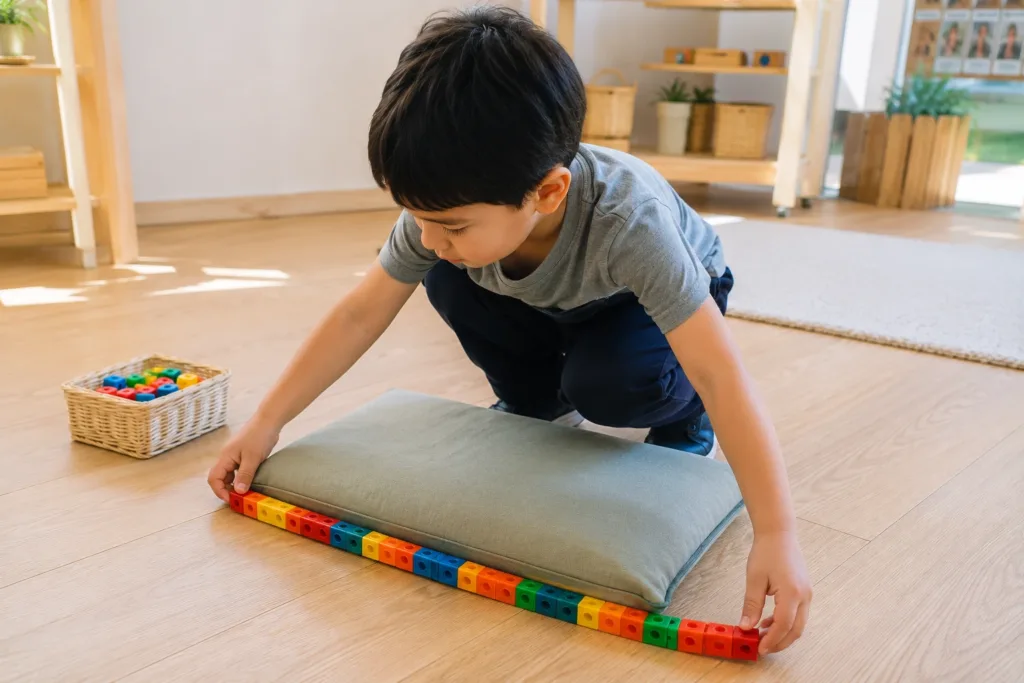
What it teaches: Measurement and comparison.
How to do it: Use blocks or toy bricks to measure household items instead of a ruler — “How many blocks tall is the couch cushion?”
The learning connection: This visual approach builds an intuitive sense of measurement before formal units are introduced.
Integrated Outdoor STEM Activities for Preschoolers
Combining subjects into hands-on STEM activities for preschoolers that move outdoors offers rich, multisensory learning.
13. Mud Kitchen Proportion Play
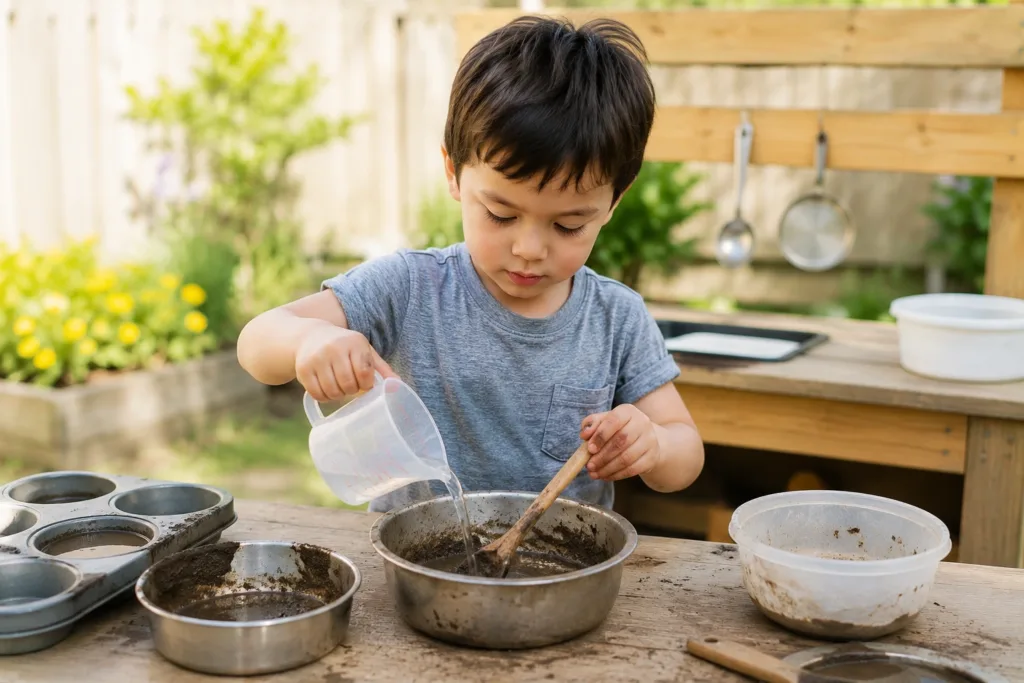
What it teaches: Volume, liquid-to-solid ratios, and chemical consistency.
How to do it: Set up an outdoor play station with dirt, water, measuring cups, spoons, and muffin tins. Let your child mix “cake batter” or “soup,” and experiment with how much water is needed to make thick mud versus runny water.
The learning connection: Mixing proportions builds intuitive math and chemistry concepts and provides essential sensory input that calms the nervous system.
14. DIY Sundial and Shadow Tracking
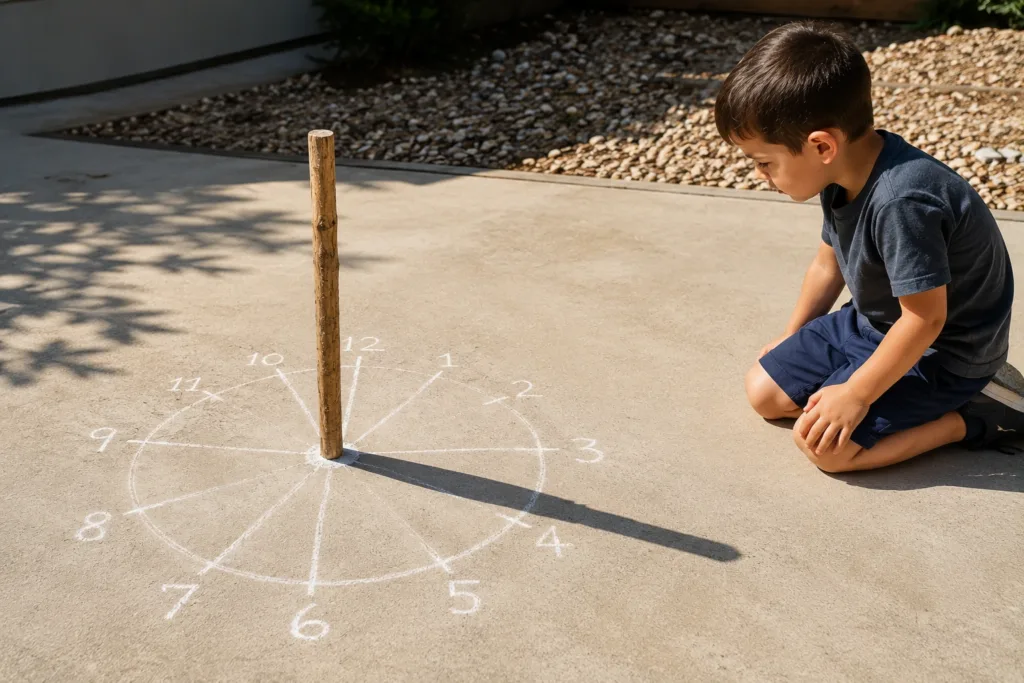
What it teaches: Time and the sun’s movement.
How to do it: Place a stick upright in a sunny spot. Trace the stick’s shadow with chalk every hour and write down the time.
The learning connection: Children see how shadows shift position and length throughout the day, providing an early introduction to Earth’s rotation around the sun.
15. Bug Hotel Habitat
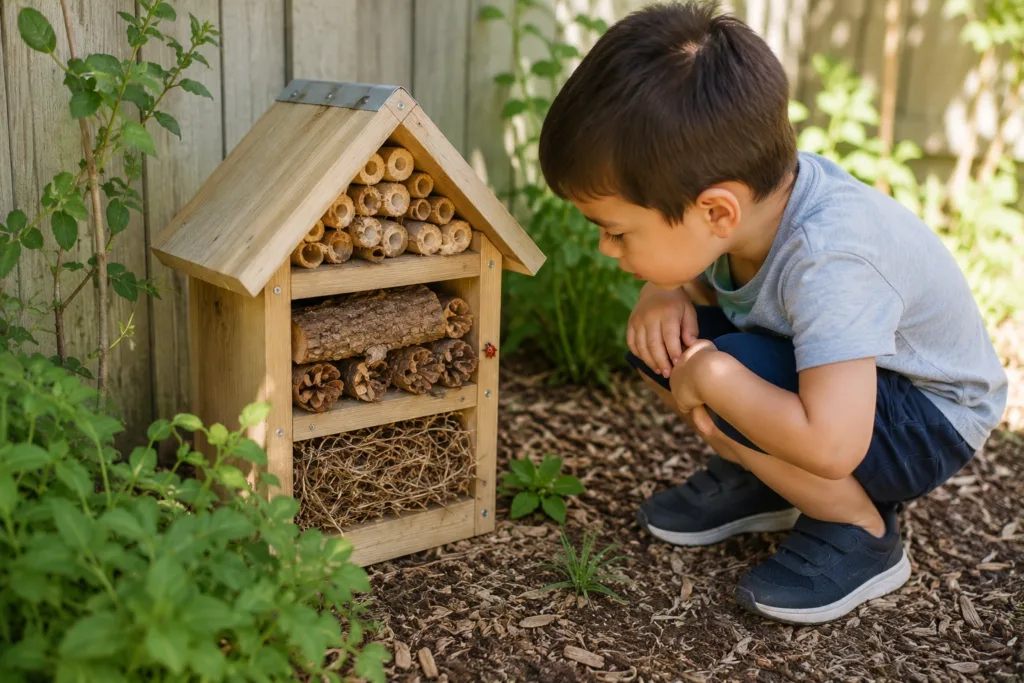
What it teaches: Biology, ecology, environmental empathy, and balance.
How to do it: Fill a small box with bamboo reeds, pinecones, bark, and dry grass. Place it in a quiet corner of your garden.
The learning connection: Over time, observe which mini-beasts (ladybugs, solitary bees, woodlice) move in. This teaches biodiversity and nurtures care for living organisms.
Why Hands-On Learning Matters in Early Childhood
Children learn best through play. When early learning is interactive and child-led, it builds resilience; trying, failing, and rebuilding teaches emotional regulation. It expands language, as talking through an experiment introduces rich descriptive vocabulary. And it grows confidence, showing children that they are capable of figuring things out for themselves.
You don’t need a big production every day. The best STEM ideas for preschoolers fit naturally into everyday routines such as cooking together, sorting toys, or simply asking “what do you think will happen?”
FAQ
What age should preschoolers start STEM activities?
Children can begin STEM activities as early as 3 years old through simple, play-based experiences such as sorting objects, stacking blocks, water play, and exploring cause and effect. As they grow closer to 4 to 5 years, they can participate in more structured STEM challenges that involve problem-solving, early engineering, and basic mathematical thinking.
Do preschool STEM activities require special kits or expensive equipment?
No. Most STEM activities for preschoolers can be created using everyday household items such as water, cardboard, paper towels, play dough, kitchen utensils, blocks, leaves, sticks, and recycled materials. The goal is to encourage curiosity, exploration, and creative thinking rather than relying on expensive educational toys or science kits.
What are some easy STEM activities for preschoolers at home?
Simple STEM activities include floating and sinking experiments, building towers with spaghetti and marshmallows, creating cardboard ramps for toy cars, sorting leaves and stones during a nature walk, making play dough shapes, or exploring shadows with a torch. Most activities take less than 20 minutes and require minimal preparation.
How can I teach STEM to preschoolers without using screens?
Screen-free STEM learning focuses on hands-on exploration and open-ended questions. Encourage your child to observe, predict, build, test, and experiment using real-world materials. Asking questions such as “What do you think will happen?” or “Why do you think that changed?” helps children develop critical thinking while learning through play and discovery.
Nurturing Your Child’s Future at Learning Blocks
Providing rich learning experiences at home is a wonderful start, but surrounding your child with a dedicated, expert-led environment can make all the difference during these foundation years.
At Learning Blocks Dural, we believe every child is a natural researcher. Our early childhood programs are thoughtfully designed around child-led discovery, quality resources, and qualified educators who bring play-based learning to life every day.
Contact Learning Blocks today to learn more about our curriculum, book a tour, or discuss enrolling your child.