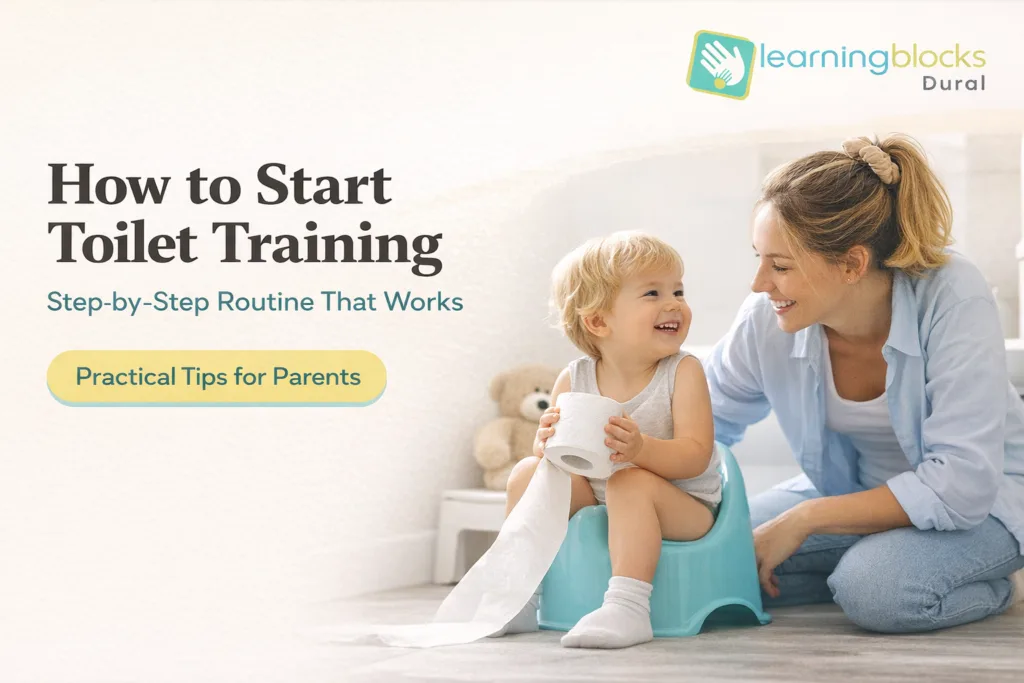
How to Start Toilet Training a Toddler: Step-by-Step Routine That Works
Quick Summary
Starting toilet training is a structured process that works best with consistent routines, clear communication, and positive reinforcement. By following a step-by-step approach and recognising your child’s natural cues, toddlers can build independence without stress. A predictable routine and calm responses are essential for long-term success.
Toilet training is a major developmental milestone that requires patience, timing, and consistency. A structured routine helps children understand expectations and gradually transition from diapers to independent toileting.
Before starting, it is important to understand whether your child is ready. Recognising physical and emotional signals helps prevent resistance and delays. A detailed explanation of readiness cues is covered in toilet training readiness signs and age expectations.
Step 1: Prepare for the First Day of Toilet Training
Set Up the Environment
- Use a child-friendly potty or toilet seat adapter
- Keep wipes, extra clothes, and underwear nearby
- Place a waterproof mat in the training area
Choose Practical Clothing
- Use elastic waist pants for quick removal
- Avoid buttons or complicated outfits
- Shift to underwear during the day
Introduce the Routine
Use simple language and allow your child to explore the potty without pressure. Familiarity reduces hesitation and builds confidence.
Step 2: Establish a Consistent Daily Routine
Consistency is the most important factor in toilet training success. A predictable schedule helps toddlers build habits.
| Time | Action |
|---|---|
| Morning | Sit on the potty after waking |
| After meals | Sit for 2–5 minutes |
| Every 1–2 hours | Regular potty attempts |
| Before bedtime | Final potty visit |
Step 3: Recognise Timing Cues
Children often show signals before they can communicate clearly.
- Fidgeting or squirming
- Holding the genital area
- Sudden stillness or hiding
- Facial expressions showing effort
Responding quickly to these cues improves success.
Step 4: Use Positive Reinforcement
- Use clear and descriptive praise
- Introduce simple rewards like stickers
- Focus on effort and consistency
Avoid punishment or pressure, as it can create resistance.
Step 5: Teach Hygiene Habits Early
- Wash hands after every attempt
- Teach basic wiping techniques
- Encourage flushing
Step 6: Handle Accidents Calmly
- Stay calm and neutral
- Clean up without frustration
- Maintain the routine
Consistency matters more than perfection.
Step 7: Maintain Consistency Across Environments
- Align routines with caregivers
- Keep schedules similar during travel
- Use consistent language and cues
A broader understanding of routines and long-term progression is explained in the toilet training guide for toddlers.
How Long Does Toilet Training Take?
- Initial learning: 3–10 days
- Consistency phase: 3–6 weeks
- Full independence: up to 2–3 months
Common Mistakes to Avoid
- Starting too early
- Inconsistent routines
- Overcomplicating instructions
- Using pressure or punishment
- Switching methods frequently
Conclusion
Toilet training success depends on preparation, consistency, and patience. A structured routine, combined with encouragement and clear communication, helps toddlers build independence over time.
Frequently Asked Questions
How often should a child sit on the potty?
Every 1–2 hours and after key moments like meals or sleep.
How long should each session last?
Typically 2–5 minutes.
What if a child refuses?
Pause and reintroduce gradually without pressure.
Are rewards necessary?
Simple praise is effective; rewards should be minimal.